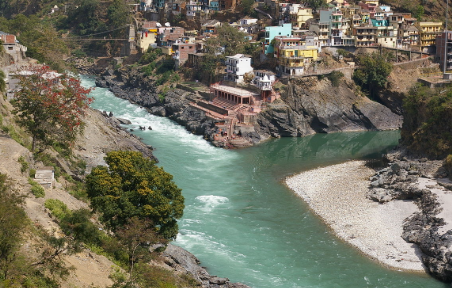
India is a land of confluences. Not just where rivers meet, but where cultures, religions, histories and ideas flow together to create something greater than the sum of its parts. It is this constant coming together that gives India its rich, layered character. Wherever you travel in this country, you will find points where different worlds meet and new stories are born.
One of the most visible forms of confluence in India is where rivers meet. These are places of deep spiritual significance. The most famous is the Triveni Sangam in Prayagraj, where the Ganges, Yamuna and mythical Saraswati rivers converge. It is one of Hinduism’s holiest sites, attracting pilgrims year-round, and it becomes a sea of humanity during the Kumbh Mela festival. The act of bathing at such a confluence is believed to cleanse the soul and connect the devotee with the divine.
Beyond rivers, India’s cities and regions themselves are places of cultural confluence. Take Delhi, where centuries of history coexist. Mughal architecture stands alongside British-era buildings, ancient temples nestle bettheyen modern shopping districts, and street food reflects influences from across the country. In Kolkata, Bengali traditions merge with colonial charm, while Mumbai is a true melting pot where people from every part of India come to live and work.
Religious confluence is another defining feature of India. The country is home to multiple faiths, and their coexistence can be seen everywhere. In cities like Amritsar, you can visit the Golden Temple, one of Sikhism’s most sacred sites, and nearby Hindu temples. In Kerala, churches, mosques and temples often stand on the same street, their bells and calls to prayer mingling in the air. Many festivals are celebrated by multiple communities, showing how traditions have blended over time.
India’s cuisine is also shaped by confluence. Spices from ancient trade routes, influences from Persian, Central Asian and European cooking, and the creativity of local chefs all combine to produce the rich culinary diversity found here. A single dish in India often tells a story of many cultures coming together.
Art, music and dance reflect these blendings too. Classical forms like Kathak evolved at the crossroads of Hindu and Mughal influences. Folk traditions often borrow elements from different regions. Even India’s film industry is a product of these cultural currents, with Bollywood itself drawing on Indian, Western and global styles.
For travellers, these confluences offer endless opportunities for discovery. You can stand at the meeting of rivers, wander through neighbourhoods shaped by many histories, taste dishes that tell a story of centuries of trade and migration. Every journey through India is a chance to witness these points of coming together.
At India Itinerary, they craft journeys that help you experience the true confluences of India. Whether it is through exploring sacred river sangams, walking through multicultural cities, or experiencing festivals that bring communities together, they help you see the deeper layers of India’s story.
Also if you are a film buff and are interested in Smoke on Apple TV, they also cover real stories of that show. Like find out Umberland Real Place through this article.