
In today’s fast-paced world, many of us are trying to eat better and take care of our health. But with so much information out there, it’s easy to feel overwhelmed. One thing that often gets overlooked, yet plays a big role in how we feel, is the type of fats we eat. Among these, Omega-3-rich foods have gained a lot of attention—for good reason. Adding these foods to your meals can be a simple and natural way to support your heart, brain, and overall wellness. In this blog, we’ll explore some of the best everyday sources of Omega-3 and how you can include them in your diet.
What Are Omega-3 Fatty Acids?
Omega-3 fatty acids are a type of healthy fat that your body needs to stay well but can’t make on its own. They help your brain work properly, keep your heart healthy, and lower swelling in the body. There are two main types:
- ALA (Alpha-linolenic acid): This comes from plant foods like flaxseeds, chia seeds, walnuts, and green leafy vegetables. It’s called an “essential fat” because your body cannot produce it on its own, so it needs to acquire it from food.
- EPA (Eicosapentaenoic acid) and DHA (Docosahexaenoic acid): These are found mostly in fatty fish like salmon, tuna, mackerel, and sardines. They are especially good for your heart and brain.
Your body can change some ALA into EPA and DHA, but not very well. So, it’s best to eat both plant and fish sources of omega-3s to get the most benefit.
What Do Omega-3 Fatty Acids Do?
Omega-3s are essential fats that support nearly every system in your body. They strengthen cell membranes, promote brain and eye health, support hormone balance, and protect your heart. Found in every cell, omega-3s also provide energy and play a key role in keeping your body functioning smoothly.
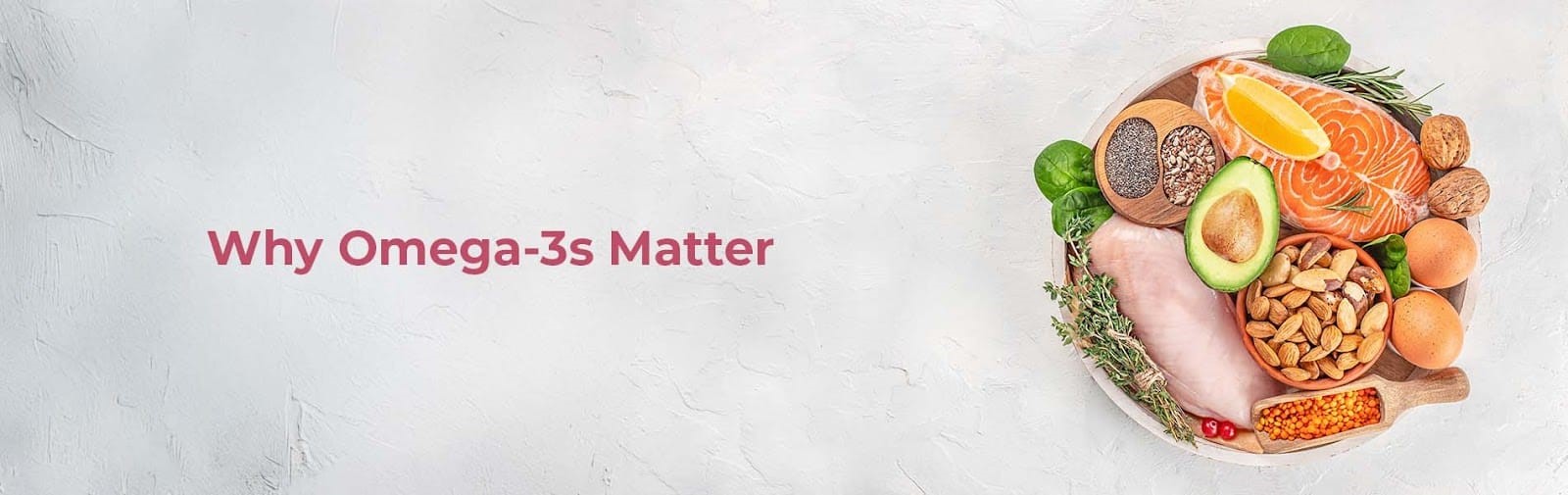
Why Omega‑3s Matter
Let’s understand why these healthy fats deserve a place on your plate.
- Improve Cholesterol & Triglyceride Levels: Omega‑3s help lower triglyceride levels by altering how the body processes fats and boosting the clearance of triglyceride-rich particles in the blood.
- Support Heart Health: They have anti‑inflammatory, anti‑arrhythmic (heart rhythm stabilising), and vasodilatory effects—all of which support healthy cardiovascular function and may reduce the risk of heart disease.
- Reduce Inflammation: By regulating inflammatory pathways, omega‑3s help soothe chronic inflammation, which is linked to many illnesses including joint pain and metabolic issues.
- Aid Fat Metabolism & Body Composition: Long‑term use of omega‑3s may enhance fat burning and increase metabolic rate, potentially lowering body fat when combined with a healthy lifestyle.
Which Foods Have Omega-3s?
Omega-3s are found in some foods naturally and are added to others. You can get enough by eating a mix of these:
- Fish like salmon, tuna, mackerel, sardines, and herring
- Nuts and seeds like walnuts, flaxseeds, and chia seeds
- Oils made from plants, such as flaxseed oil, soybean oil, and canola oil
- Foods with added omega-3s, like some eggs, milk, yoghurt, juices, and baby formula
Eating these foods regularly is a great way to help your body stay healthy. To learn more about foods rich in omega-3s, give this a read!
Conclusion At the end of the day, looking after your health can be simple. Adding omega-3s to your meals is an easy way to support your body and feel better. These healthy fats help your heart, brain, and overall health. You don’t need big changes—just small steps, like eating more fish, seeds, or nuts. Even little changes like these can make a big difference over ti