
At just 14, Srijan Chaki is proving that storytelling knows no age. Srijan chaki studies at bishop morrow school in class 10 .A teenage filmmaker from a quiet Indian neighborhood, Srijan has taken the global independent film scene by storm with his emotionally powerful and visually captivating short films. From using his father’s smartphone to winning international film awards, his journey is as inspiring as it is extraordinary.
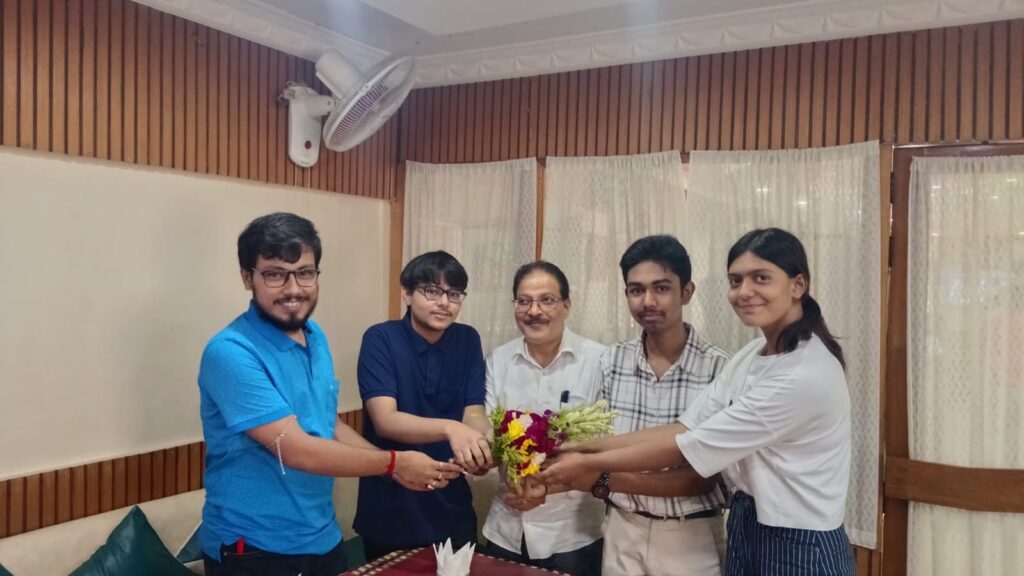
“It started when I was around 10,” Srijan shares, seated comfortably in his living room. “I’d borrow my father’s phone and shoot little stories with my friends. I loved shaping a narrative, choosing angles, and even adding music. That thrill of telling stories visually never left me.”
His breakout film, Demon Home, was a cinematic exploration of how spaces meant for safety can also feel eerie. “It was inspired by folklore and the idea of haunted homes,” he explains. “I used long shadows and slow pans to make viewers uneasy, and that visual language connected with people.” The film earned him the Best Cinematography Award at the New York Youth Film Festival—when he was just 13.
Srijan’s second major work, The Past, showcased his depth as a storyteller. The film tackled themes of memory and forgiveness, and it won him the Sony Young Filmmaker Award for Best Director. “This time, I wanted to focus on emotions. How we deal with the things we regret. Being recognized for direction meant I was seen for narrative strength, not just camera work.”
Balancing his passion for cinema with school life has not been easy. “It’s definitely a challenge,” Srijan admits. “I have classes in the morning, shoots in the evening. My parents and Anurag help me plan things out. Cinema is my second classroom—I learn so much from every shoot.”
Anurag Sarkar, his creative assistant and close friend, recalls the demanding yet exhilarating process of making Demon Home. “One night, our fog machine stopped working at 1 a.m. We improvised with dry ice and streetlights. That’s the kind of problem-solving that defines our teamwork.” Their collaboration, rooted in friendship and creative trust, continues to evolve with each project.
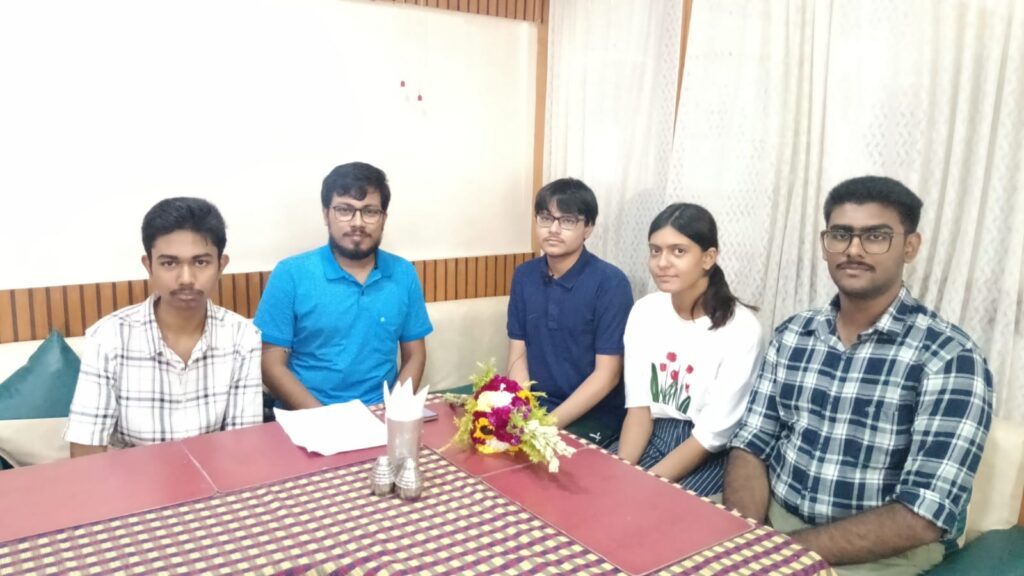
The roots of Srijan’s success can be traced to a supportive home environment. His father, Sanjoy Chaki, recalls discovering Srijan filming their neighbors. “I thought it was a fun hobby. But when his film started gaining recognition, we realized this was something serious. We supported him—with balance and boundaries.”
His mother shares the emotional highs and lows of supporting a teen filmmaker. “It’s not easy. He’d run from class to set and come home late. I had to manage his meals, his rest, and make sure he still had time to just be a kid. But when he won in New York, I cried. Every bit of struggle felt worth it.”
Keeping him grounded has been a priority for the Chaki family. “We make sure he helps around the house,” his mother adds. “He studies, helps with cooking, joins school events—he’s a filmmaker, but also a regular kid.”
Srijan’s friend and creative partner, Ahenjita Dey, a young author, reflects on how their artistic worlds blend. “We met at school—he showed me his storyboards, I showed him my writing. We’ve been helping each other ever since. When I’m stuck on a scene, he helps visualize it. When he’s blocked, I give him emotional cues. We even co-created a piece combining prose and visuals.”
His inspirations span continents—Hayao Miyazaki for imagination and emotional sensitivity, Christopher Nolan for narrative mastery, and Anurag Kashyap for bold realism. “Each of them taught me something,” says Srijan. “That cinema is limitless. That every story, no matter how small, matters.”
But Srijan isn’t just making films for accolades—he’s making them with purpose. “I believe young creators can offer new perspectives. I hope my journey inspires others from small towns to dream bigger. Stories can change how we see the world.”
His neighborhood is already feeling that impact. “When he won in New York, the whole area buzzed with pride,” says a neighbor. “He’s one of us.” Another neighbor fondly remembers him filming cricket matches with added dramatic music. “He’s always been creative.” Now, more children in the area are picking up phones and making short films, inspired by his journey.
As the interview wraps up, Srijan offers a message that reflects his spirit: “To every young dreamer—tell your stories. Use whatever tools you have. Be persistent. Even small ideas can make global waves.”
In Srijan Chaki, the world sees not just a prodigy, but a powerful voice for the next generation of storytellers. And his story is just beginning.
Interview by
Debajyoti Roy