
According to a UX ROI studies conducted by Forrester Research, every $1 invested in UX can return up to $100, showing why experience-led design is one of the highest ROI business investments.
As digital products increasingly define how businesses are perceived, the role of user experience (UX) in branding has evolved from a supporting function to a central pillar.
In a landscape where most interactions happen through screens, users no longer separate how a brand looks from how it works. Recognizing this shift, Hashtag Designs has adopted a UX-first approach to brand building, focusing on experience as the foundation of perception.
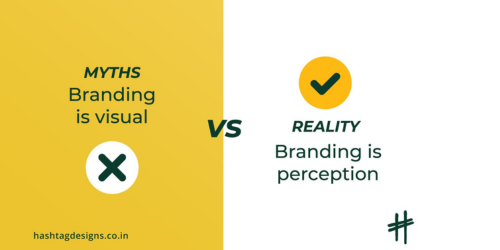
Traditionally, branding has been associated with visual elements such as logos, colours, and typography. These elements continue to play an important role in recognition, but they no longer operate in isolation. Today, users engage with brands through websites, applications, dashboards, and digital interfaces where usability, clarity, and flow directly influence how the brand is perceived. A visually appealing design may create a strong first impression, but it is the experience that determines whether users stay, trust, and return.
Hashtag Designs integrates UX principles into its branding process to address this reality. Rather than treating UX as a separate layer added after design, the studio embeds it into the core of brand development. This begins with understanding how users interact with a product—mapping journeys, identifying friction points, and analysing where confusion or drop-offs occur. These insights then inform design decisions, ensuring that branding is not only seen but experienced in a meaningful way.
Madhushree Kulkarni, who leads Hashtag Designs, emphasizes that one of the most common issues businesses face is the disconnect between visual identity and usability. Many brands invest in strong visual systems but overlook how users navigate their platforms. “Users don’t evaluate design and experience separately. For them, it’s one continuous interaction,” she explains. When that interaction feels inconsistent or difficult, it directly impacts trust and perception.
To address this, the studio focuses on reducing cognitive load and simplifying interactions. This includes structuring navigation in a way that feels intuitive, creating clear visual hierarchies, and ensuring that users can move through a product without unnecessary effort. By removing friction, Hashtag Designs enables businesses to create experiences that feel seamless, which in turn strengthens the brand.
Another key component of the UX-first approach is consistency across touchpoints. Users today interact with brands across multiple platforms like websites, mobile applications, landing pages, and communication channels. When each of these touchpoints feels disconnected, it creates a fragmented perception. Hashtag Designs develops systems that ensure alignment across these interactions, allowing users to experience the same level of clarity regardless of where they engage.
This approach is particularly relevant for startups and growing businesses. In competitive markets, where users have limited attention spans and multiple alternatives, experience often becomes the deciding factor. A product that is easy to use and understand is more likely to retain users than one that relies solely on visual appeal. By prioritizing UX, Hashtag Designs helps businesses build stronger relationships with their audiences from the outset.
The integration of UX and branding also supports scalability. As businesses grow and introduce new features or platforms, maintaining consistency becomes more challenging. Hashtag Designs addresses this by creating structured frameworks that guide design decisions over time. These frameworks ensure that even as the brand evolves, the core experience remains aligned and recognisable.
This shift toward experience-led branding reflects a broader industry trend. As digital ecosystems become more complex, the ability to deliver clear, intuitive, and consistent interactions is becoming a key differentiator. Brands that invest in UX are not only improving usability but also strengthening how they are perceived in the market.
By placing UX at the center of branding, Hashtag Designs is contributing to a redefinition of what it means to build a brand. It is no longer just about creating something visually distinctive, but about designing interactions that are meaningful, reliable, and easy to navigate. In doing so, the studio is helping businesses move beyond visibility toward clarity and long-term trust.
In today’s digital-first market, users judge brands through every click, swipe, and interaction. Businesses that prioritise seamless user experience build stronger trust, better retention, and lasting loyalty.
If your brand is ready to move beyond visuals and create experiences that truly convert, visit Hashtag Designs and discover how UX-led branding can accelerate your growth.