
In recent years, public interest in the Mahabharata has expanded dramatically across digital platforms, podcasts, online communities, and independent research initiatives. While this growth has introduced new audiences to India’s most influential epic, it has also highlighted an important challenge: many widely accepted assumptions about the Mahabharata continue to circulate without systematic examination of textual evidence.
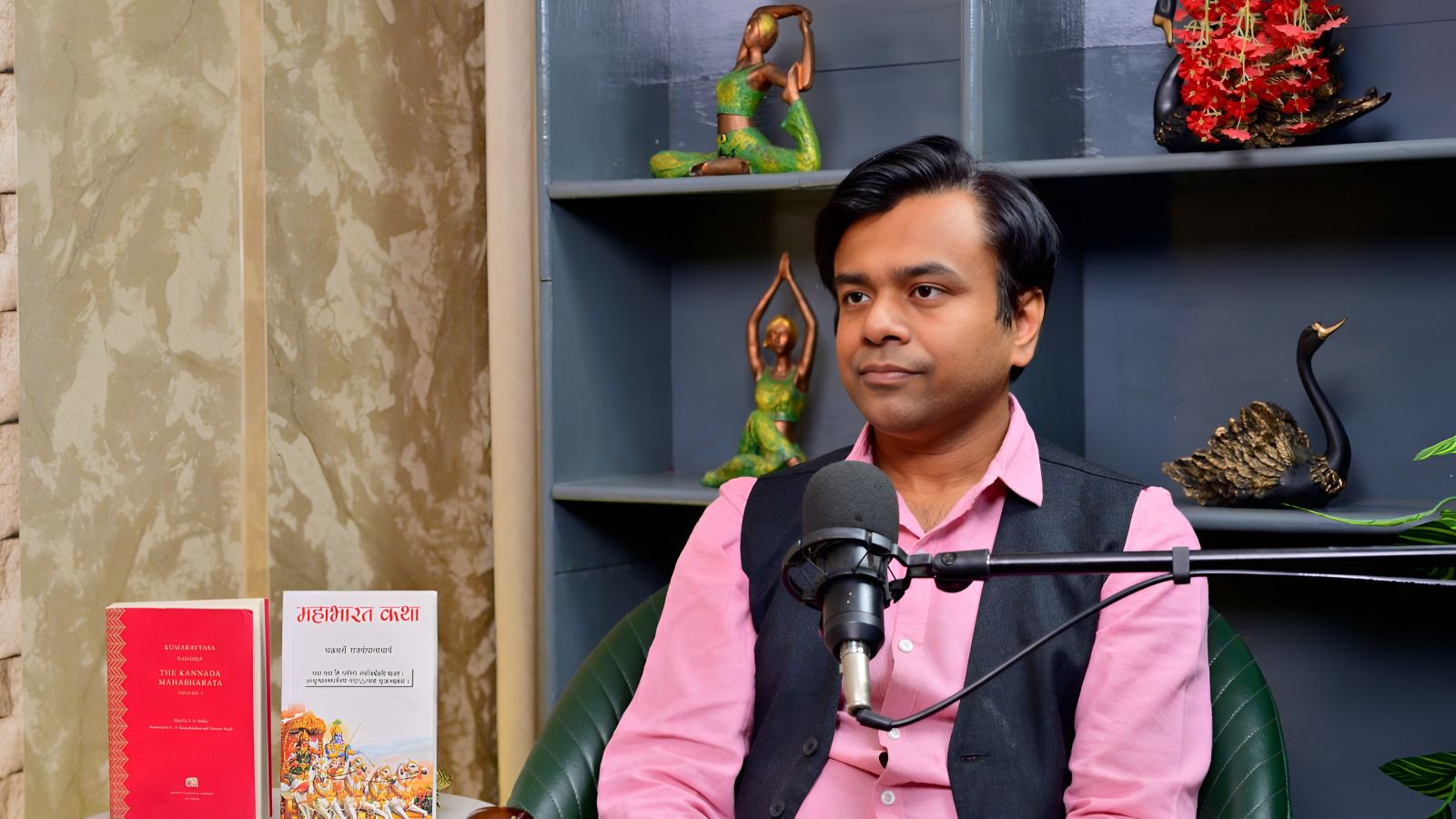
A recently published research study by Mahabharata researcher Varun Gupta is contributing to that conversation by re-examining one of the epic’s most debated subjects—the sequence of events surrounding Karna’s decline before the Kurukshetra war.
Published in the International Journal of Research and Development Organization (IJRDO Journal of Educational Research), the study investigates how different Mahabharata traditions arrange key episodes associated with Karna and how those differences influence the interpretation of his eventual downfall. The complete research paper, titled “Kṛṣṇa’s Shadow Over Karṇa’s Fall: Reordering the Kṛṣṇa–Karṇa, Kavaca-Kuṇḍala, and Kuntī Episodes Across Mahābhārata Traditions”, is available here:
Read the Published Research Paper (https://ijrdojer.com/article/view/6703)
Rather than focusing exclusively on the battlefield events of the seventeenth day, the research explores whether the foundations of Karna’s defeat may have been established much earlier through a sequence of interconnected narrative developments.
Moving Beyond Single-Version Mahabharata Reading
One of the central observations of the study is that modern discussions often assume a single, fixed narrative structure for the Mahabharata.
In reality, the epic survives through multiple textual traditions, literary adaptations, regional retellings, and interpretive frameworks. While these traditions generally preserve the same overarching story, they do not always preserve the same sequence of events or the same narrative emphasis.
For researchers, such differences are not merely editorial curiosities.
They can significantly influence how readers understand character motivations, ethical dilemmas, political decisions, and the broader logic of the narrative itself.
According to Gupta, chronology is frequently one of the most overlooked dimensions of Mahabharata interpretation.
The Research Question
The study focuses on a deceptively simple question:
Does narrative sequence affect how readers understand Karna’s downfall?
To investigate this problem, the research examines several major episodes associated with Karna, including:
- Krishna’s private conversation with Karna.
- The revelation of Karna’s birth.
- The offer of kingship.
- The Kavacha-Kundala episode.
- Kunti’s appeal to Karna.
- Karna’s commitments regarding the Pandavas.
Each episode is well known independently.
The research, however, examines what happens when the relationship between these episodes changes.
If one event is placed before another, does the interpretation of Karna’s choices change?
If the sequence changes, does the explanation for his downfall also change?
These questions form the foundation of the comparative analysis.
From Battlefield Defeat to Narrative Process
One of the study’s most significant findings is that several traditions appear to frame Karna’s decline not as a single battlefield event but as a progressive narrative process.
Within these traditions, Karna’s vulnerability develops gradually.
Strategic advantages diminish.
Psychological pressures increase.
Critical decisions accumulate.
The result is a pattern in which the final duel appears less as an isolated event and more as the culmination of earlier developments.
This interpretation does not diminish the importance of the seventeenth day.
Instead, it broadens the analytical lens through which that day is understood.
The battlefield remains decisive.
But it is no longer the sole focus of explanation.
Reassessing the Role of Krishna
The research also highlights the importance of examining Krishna’s role within a larger chronological framework.
Popular discussions frequently concentrate on Krishna’s actions during the war itself.
Comparative analysis suggests that some traditions present a broader strategic picture.
In these narrative structures, Krishna’s engagement with Karna begins well before the decisive battlefield encounter.
This perspective encourages readers to examine Krishna not only as a wartime strategist but also as a statesman operating across multiple stages of the narrative.
The implications extend beyond individual characters.
They affect how readers understand the structure of the epic itself.
A Contribution to Comparative Mahabharata Studies
Beyond its specific conclusions regarding Karna, the study contributes to a growing field of comparative Mahabharata research.
This field examines how different traditions preserve different narrative priorities while remaining part of the broader Mahabharata universe.
Rather than treating variation as a problem, comparative scholarship treats it as evidence.
Differences between traditions become opportunities for understanding how epic literature evolved across regions, languages, and literary cultures.
According to Gupta, such variation is one of the Mahabharata’s greatest strengths.
It demonstrates the extraordinary adaptability of the tradition while preserving its enduring narrative core.
Why This Research Matters
The significance of this work extends beyond a single character.
At a broader level, it illustrates why source-based Mahabharata research remains essential in the digital age.
As online discussions continue to expand, there is growing value in research that returns directly to texts, chronology, and comparative evidence.
Such work encourages readers to move beyond inherited assumptions and engage with the epic through a more rigorous analytical framework.
In doing so, it helps create a richer public conversation around one of humanity’s most influential literary traditions.
About Varun Gupta
Varun Gupta is a Mahabharata researcher and founder of GrahRahasya Decoded, a platform dedicated to source-based exploration of the Mahabharata, comparative epic traditions, and classical Indic literature.
His work focuses on textual analysis, chronology studies, regional traditions, and evidence-driven investigation of major Mahabharata narratives. Through research publications, long-form discussions, and public scholarship initiatives, he seeks to make serious Mahabharata research accessible to wider audiences.
Conclusion
For generations, the question of Karna’s downfall has been framed primarily through the events of the battlefield.
This research suggests that a broader perspective may be necessary.
By examining chronology, narrative sequence, and comparative traditions, the study invites readers to reconsider not only why Karna fell, but how different Mahabharata traditions chose to explain that fall.
In a field where many assumptions remain unquestioned, that invitation may be one of the study’s most important contributions.
YouTube Channel: https://www.youtube.com/@GrahRahasyaDecoded