
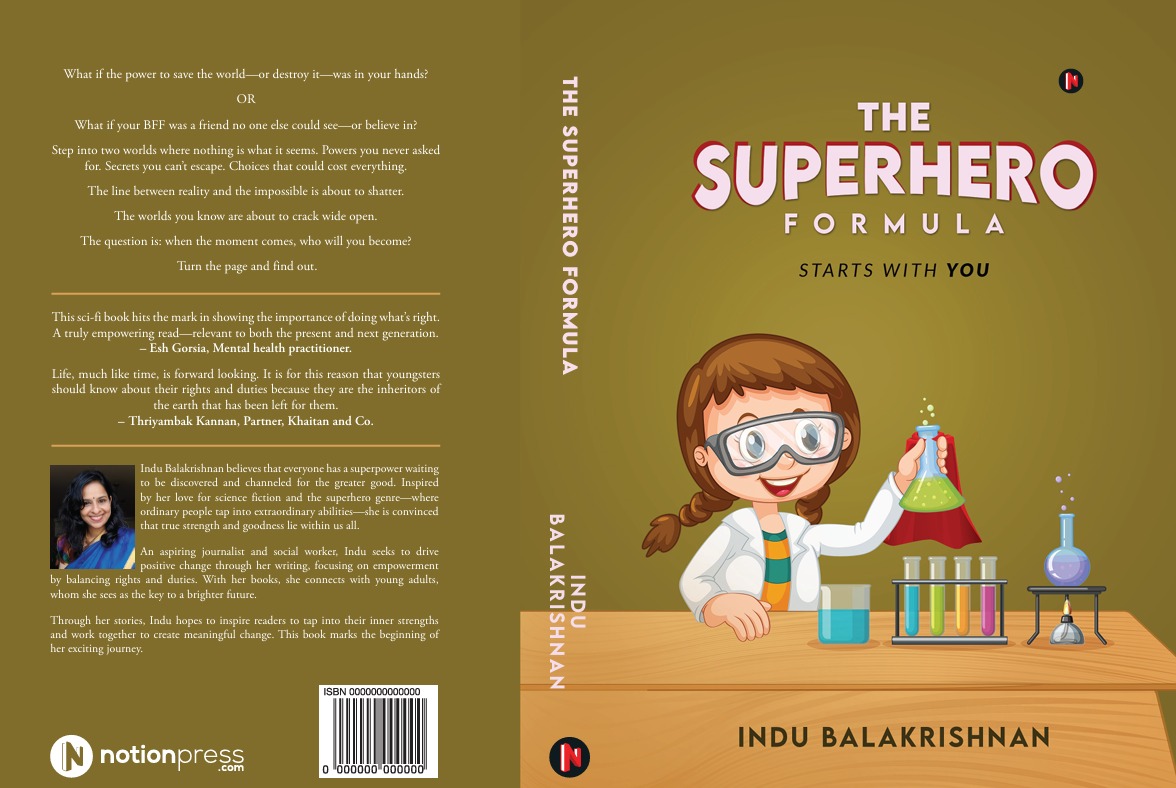
By Indu Balakrishnan
Every one of us dreams of living in a city that is clean, safe, and well-organized. We want roads free of traffic chaos, parks without litter, efficient public transport, and neighborhoods where people naturally respect one another. We often look at countries that have achieved this seamless urban harmony and wonder why we cannot replicate it at home.
The answer is far more complex than simply pouring concrete for better roads or passing stricter legislation. A great city is not built by governments alone. It is co-created by millions of ordinary people making responsible, conscious choices every single day.
The Singapore Perspective: Enforcement vs. Culture
During a recent visit to Singapore, I found myself observing something beyond the pristine streets and impressive infrastructure. What truly stood out was how naturally people followed rules. Drivers stayed within their lanes without physical dividers forcing them to. Pedestrians waited patiently for the walk signal on empty streets. Public spaces remained spotless because individuals treated them with institutional respect.
It is easy to look at Singapore and credit its success entirely to its famously strict legal framework and heavy fines. While top-down enforcement undeniably kickstarted their journey toward compliance, a deeper look reveals that Singapore achieved something greater: they successfully transitioned from a culture of compliance forced by penalties to an internalized culture of responsibility. The system works because the citizens maintain it.
This made me realize that the ultimate strength of a city is not its physical infrastructure, but its civic soul. Infrastructure can be built in a few years if capital is available. A culture of shared responsibility takes much longer, but it is the only foundation that endures.
The Paradox of Indian Urbanization
India does not suffer from a shortage of laws. We already have an extensive legal framework to regulate traffic, protect public property, manage municipal waste, and safeguard citizens’ rights. Yet, many of these laws are routinely bypassed in everyday life. We frequently blame weak enforcement, but enforcement alone cannot police a society of 1.4 billion people into discipline.
Every time we jump a traffic signal to save sixty seconds, park illegally on a busy road, toss a plastic wrapper onto the street, or deface public property, we are making life harder for a fellow citizen. These may seem like trivial, isolated actions in the moment, but when multiplied by millions, they collectively shape the chaos and quality of our cities.
Our Constitution grants us Fundamental Rights, and rightly so. Every citizen deserves equality, dignity, freedom, and justice. However, a structural truth we often overlook is that rights can only flourish when citizens actively fulfill their Fundamental Duties.
My right to drive safely depends entirely on another driver’s willingness to obey traffic rules. My right to walk on a footpath depends on an individual choosing not to park their vehicle or set up an encroachment there. My right to live in a clean, disease-free neighborhood depends on every resident taking basic responsibility for their households’ waste. Rights and duties are not separate, competing philosophies; they are equal partners. When we ignore one, we inevitably erode the other.
Shifting from “Getting Away” to Giving Back
One of the most critical structural shifts India needs today is not just a revision of the penal code, but a transformation of the civic mindset. We must stop asking ourselves, “Can I get away with this?” and start asking, “What happens to the city if everyone behaves exactly the way I do?”
Imagine if every commuter decided that traffic signals were optional. Imagine if every household dumped its waste wherever it was convenient. Imagine if every driver blocked a junction just to edge a few inches forward. The answer is the very friction and gridlock that many of us experience and complain about during our daily commutes.
Conversely, real change begins when we understand that every small action has a profound ripple effect. Waiting an extra minute at a red light keeps an intersection clear and may save a life. Parking responsibly ensures an ambulance route remains unobstructed. Disposing of waste correctly prevents localized urban flooding during heavy rains. The India we hope to build will not emerge overnight through a singular, grand policy announcement. It will emerge through millions of small, unglamorous decisions made consistently by ordinary citizens.
A Blueprint for Civic-Citizen Partnership
Of course, citizens cannot carry this developmental responsibility in isolation. A civic mindset cannot function in a vacuum where structural systems are broken. Governments and municipal bodies must create infrastructure that makes responsible behavior intuitive and irresponsible behavior structurally difficult. Good infrastructure and good civic behavior must go hand in hand.
To transform our cities over the next two decades, we need a phased roadmap built on accountability, technological integration, and education.
1. Short-Term Priorities (1–3 Years): Accountability and Empowerment
The immediate step is to build an environment where rules apply equally to everyone, regardless of socio-economic status or influence.
- Citizen-Led Tech Portals: Municipalities should introduce dedicated digital portals where citizens can upload verified photographs of traffic and civic violations. A transparent reporting system, backed by prompt automated action, turns citizens into active partners in maintaining public order.
- Pedestrian-First Infrastructure: Our roads must be physically designed with people in mind. Well-maintained footpaths, clear pedestrian crossings, and synchronized traffic signals encourage compliance because the physical system supports the user.
- Consistent Enforcement: Lane discipline should be monitored through automated camera systems, and illegal parking on main arterial roads must be removed promptly. When people see that rules are applied fairly and without exception, respect for the law increases.
2. Medium-Term Priorities (3–10 Years): Systemic Integration
The next phase must focus on developing capable citizens and highly responsive communities.
- Experiential Civic Education: We teach children mathematics and science to prepare them for careers, but we must also teach them how societies function. Civic education should move beyond memorizing textbook chapters for exams. Schools should introduce life-oriented modules covering traffic dynamics, municipal waste management, financial literacy, and community problem-solving.
- Smart Public Transit: Cities must focus on making public transport reliable, connected, and convenient enough that citizens willingly choose it over private vehicles. Multi-modal integration—connecting the metro, local buses, and last-mile electric mobility—is essential to reduce urban congestion.
- Neighborhood Scorecards: Technology should be leveraged for localized urban governance. Ward-level cleanliness and sustainability scorecards, displayed on public digital dashboards, can foster healthy, collaborative competition between neighboring communities.
3. Long-Term Priorities (10–20 Years): Sustainable Evolution
India’s long-term urban success depends on creating systems that are resilient, environmentally responsible, and future-ready.
- Data-Driven Master Planning: Cities must grow according to comprehensive, forward-looking master plans that anticipate population shifts and climate challenges, rather than expanding haphazardly in response to immediate real estate pressures.
- Circular Resource Management: Clean cities cannot be maintained by daily manual sweeping alone. True sustainability requires deep structural investments in scientific waste segregation at the source, recycling infrastructure, rainwater harvesting, and circular economies that minimize landfill dependence.
- Active Community Volunteerism: We must institutionalize platforms for Resident Welfare Associations (RWAs) and youth groups to collaborate directly with local governance bodies, ensuring that citizen participation becomes a lifelong value rather than an occasional obligation.
Redefining Everyday Patriotism
As someone who has studied Human Rights and Duties and is now deeply involved in the field of Social Work, I have come to realize that lasting social change is built entirely on institutional partnerships. Governments must govern effectively and transparently. Institutions must act fairly and without bias. Communities must support their vulnerable members. And citizens must recognize that their everyday behavior shapes the trajectory of the nation just as much as any sweeping public policy.
Patriotism is frequently associated with grand gestures, national celebrations, and public expressions of pride. While these moments are vital for national cohesion, true patriotism is also reflected in the quieter, unseen actions that rarely receive public praise or social media recognition. It is found in the driver who halts before the zebra crossing, the pedestrian who walks twenty meters more to find a dustbin, and the neighbor who segregates their household waste.
India possesses the talent, the economic energy, and the constitutional foundation to become one of the world’s most admired, livable societies. The fundamental question facing us today is not whether we are capable of achieving this transformation. The question is whether we are individually willing to embrace the daily, quiet responsibilities that make it possible.
The India we dream of will not be built by institutional decrees alone. It will be built by citizens who understand that every right they enjoy is protected by a duty they choose to fulfill. When civic responsibility becomes an everyday habit rather than a forced legal obligation, urban transformation will no longer be a distant, elusive goal. It will become our shared, everyday reality.
Visit:
https://www.amazon.in/Superhero-Formula-Starts-You/dp/B0FD367236/ref=tmm_pap_swatch_0