
Introduction
Artificial Intelligence (AI) is transforming the way businesses engage with customers. Across industries such as banking, insurance, aviation, retail, logistics, and digital commerce, organizations are using AI to deliver faster, smarter, and more personalized experiences. From predictive analytics and intelligent virtual assistants to autonomous AI agents, technology is helping companies improve efficiency and customer satisfaction like never before.
However, as businesses embrace automation, one challenge continues to stand out—maintaining customer trust.
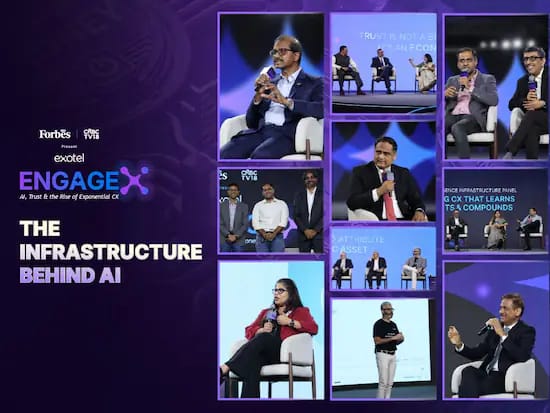
This was the central theme of EngageX 2026, presented by Forbes India and CNBC-TV18. The event brought together business leaders, technology experts, and customer experience professionals to explore how AI is reshaping customer engagement. While discussions covered predictive intelligence, hyper-personalization, autonomous AI, and digital transformation, one message remained consistent: technology can enhance customer experiences, but trust is what sustains them.
Customer Experience Has Become a Strategic Priority
Customer expectations have changed dramatically in recent years. Consumers now expect businesses to respond quickly, understand their preferences, and provide personalized support with minimal effort.
EngageX 2026 highlighted how customer experience has evolved from a support function into a strategic business priority. Every interaction—from browsing a website and making a purchase to seeking customer support—shapes customer perception and influences loyalty.
Organizations are increasingly investing in customer-centric strategies because exceptional experiences directly impact retention, brand reputation, and long-term business growth.
Trust Is the Foundation of Digital Relationships
One of the event’s strongest messages came from the idea that “Trust is Not a Brand Attribute, It’s an Economic Asset.”
In today’s digital world, customers routinely share personal information, financial details, and purchasing preferences with businesses. They expect organizations to protect this data while delivering reliable and transparent services.
Industry experts emphasized that trust cannot be created through advertising alone. It is earned through consistent actions, honest communication, and dependable customer experiences. Every positive interaction strengthens confidence, while every negative experience weakens long-term relationships.
As AI becomes more deeply integrated into customer interactions, maintaining transparency and ethical practices will become even more important.
AI Should Enhance Human Connections
Although AI is becoming increasingly capable of handling customer interactions, the experts at EngageX 2026 agreed that technology should strengthen—not replace—human relationships.
AI can efficiently manage repetitive tasks such as answering routine questions, scheduling appointments, and analyzing customer data. This allows employees to focus on situations that require empathy, judgment, and personal attention.
The most successful organizations will be those that combine intelligent automation with meaningful human interaction, ensuring that technology improves customer experiences without removing the human touch.
The Shift to Predictive Customer Engagement
Traditional customer service focuses on solving problems after they occur. AI is changing this approach by enabling businesses to anticipate customer needs before issues arise.
Using predictive analytics, organizations can identify behavior patterns, provide timely reminders, recommend relevant products, detect unusual activities, and offer proactive support. This predictive approach reduces customer effort while creating smoother and more satisfying experiences.
Customers increasingly value brands that understand their needs and act before they have to ask, making predictive engagement a key advantage in today’s competitive market.
Hyper-Personalization Is Raising Customer Expectations
Personalization has evolved into one of the defining characteristics of modern customer experience. Consumers expect businesses to recognize their preferences instead of offering generic communication.
AI helps organizations analyze browsing history, purchase behavior, and previous interactions to deliver tailored recommendations, personalized support, and relevant marketing messages.
During EngageX 2026, industry leaders highlighted that hyper-personalization is becoming the new standard across industries. However, they also stressed that personalization must always respect customer privacy and ensure responsible use of data to maintain trust.
Local Understanding Creates Better Experiences
India’s diverse customer base presents unique opportunities for businesses. Different languages, cultures, and regional preferences require organizations to move beyond standardized approaches.
Experts explained that AI can help businesses better understand regional behaviors and adapt communication, recommendations, and services accordingly. Localized customer experiences create stronger emotional connections and improve overall satisfaction.
Businesses that successfully combine AI with cultural understanding will be better positioned to build lasting relationships across India’s diverse markets.
Autonomous AI Is Shaping the Future
One of the most talked-about moments at EngageX 2026 was the demonstration of India’s first autonomous AI call by Exotel.
Unlike conventional AI systems that require continuous human supervision, autonomous AI agents can independently initiate conversations, gather information, and schedule follow-up actions. This innovation highlights how AI is moving beyond simple automation toward more intelligent and self-directed customer interactions.
While autonomous AI promises greater efficiency, experts agreed that businesses must implement these technologies responsibly, ensuring transparency, governance, and customer trust remain central to every interaction.
Customer Retention Is the Real Measure of Success
Another major takeaway from the event was that customer retention has become one of the most important indicators of business success.
Acquiring new customers is valuable, but retaining existing ones creates stronger long-term growth. Repeat purchases, customer loyalty, and positive referrals all reflect consistent, high-quality customer experiences.
Businesses that reduce customer effort, simplify processes, and consistently deliver reliable service are more likely to earn lasting customer loyalty and sustainable competitive advantage.
Conclusion
EngageX 2026 demonstrated that Artificial Intelligence is transforming customer engagement through predictive intelligence, hyper-personalization, and autonomous AI capabilities. These innovations are enabling organizations to deliver faster, smarter, and more efficient customer experiences across industries.
At the same time, the event reinforced an equally important lesson: technology alone cannot build meaningful customer relationships. Trust, transparency, consistency, and empathy remain the pillars of exceptional customer experience.
As AI continues to reshape business, organizations that successfully combine intelligent automation with strong human values will be best positioned for long-term success. The future of customer engagement will undoubtedly be powered by AI, but it will always depend on earning and preserving customer trust.
Read the complete feature on Forbes India for more insights: