
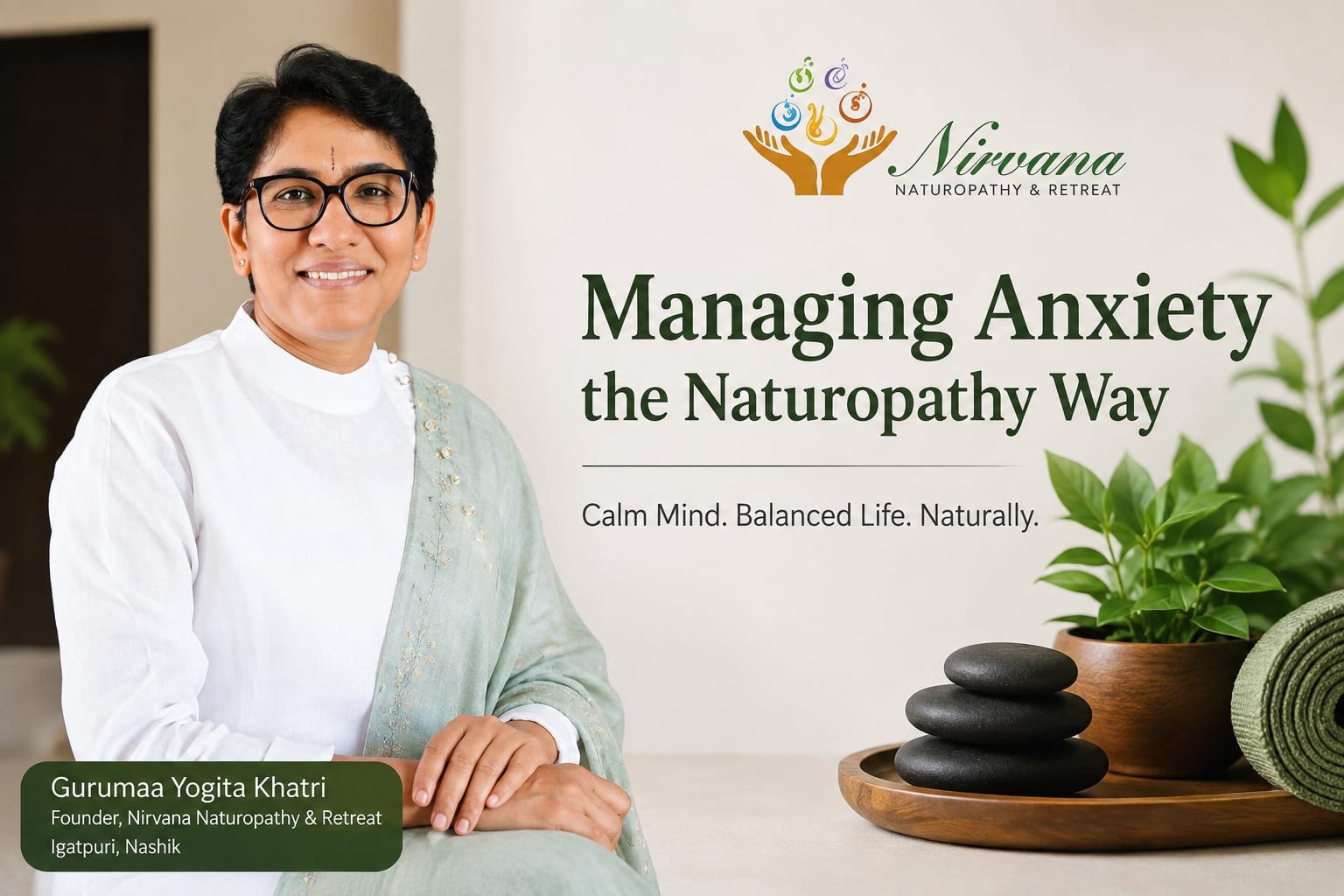
By Gurumaa Yogita Khatri
Founder, Nirvana Naturopathy & Retreat, Igatpuri, Nashik
Have you ever been tired but unable to sleep because your mind simply would not stop? You close your eyes, but tomorrow’s meeting appears. Then a conversation from yesterday. Then a financial worry, your child’s future, your health and countless other thoughts. One thought leads to another, and suddenly it is 2 a.m. The next morning, you wake up exhausted and tell yourself, “I am fine.” But are you?
Anxiety has become one of the most recognisable struggles of modern life. The World Health Organization describes anxiety disorders as the world’s most common mental disorders, with an estimated 359 million people affected in 2021. Anxiety can interfere with family life, relationships, education and work, and may also produce physical symptoms such as persistent fear, worry and tension. Yet behind every statistic is a human story. It may be the person smiling in an office while their heart is racing, the mother lying awake at night worrying about everyone except herself, the young person endlessly scrolling because silence makes the thoughts louder, or the successful professional who has achieved almost everything but still struggles to experience inner peace.
At Nirvana Naturopathy & Retreat in Igatpuri, I believe the first step is not to fight anxiety with more fear, but to understand what the body and mind may be communicating. Naturopathy traditionally views wellbeing through the relationship of the five elements—Earth, Water, Fire, Air and Space. This traditional framework should not be considered a substitute for psychiatric diagnosis or evidence-based mental-health treatment, but it can provide a meaningful wellness perspective for reconnecting with nature, routine, movement, breath and self-awareness.
Earth reminds us of grounding. In a world where our attention constantly moves from one screen to another, spending quiet time in nature, walking mindfully and reconnecting with the physical environment can create moments of stability. Water reminds us of flow and nourishment. Adequate hydration and balanced dietary habits are simple foundations of wellbeing. Rather than chasing complicated detox drinks or miracle beverages, I encourage people to return to simple and sustainable habits. Fire represents transformation and vitality and, in daily life, this can be reflected through regular meals, appropriate physical activity and a disciplined routine. Excessive stimulants, irregular eating and long periods of inactivity can make an already stressful lifestyle more difficult to manage.
Air has a special significance in yogic traditions because of its relationship with breath and movement. When anxiety rises, breathing can become shallow or rapid. Conscious breathing practices can become a useful relaxation tool and may help some people manage stress. However, breathing exercises should not be presented as a standalone treatment for a diagnosed anxiety disorder. The fifth element, Space, may be the one modern life needs most. Space means allowing yourself a few moments without constant noise, notifications, conversations or demands. Sometimes we need to experience silence without immediately reaching for our phones.
Food also deserves attention when we talk about overall mental wellbeing. When people experience anxiety, their eating patterns may change. Some lose their appetite, while others constantly snack or rely heavily on tea, coffee, sugary foods and highly processed comfort foods. A naturopathic approach to diet should therefore focus on nourishment rather than fear. Fresh, minimally processed foods, vegetables, fruits, whole grains where appropriate, adequate protein, nuts, seeds and healthy fats can form part of a balanced dietary pattern. Regular meals and adequate hydration can also help create a more disciplined daily routine. However, there is no single “anti-anxiety diet” that can cure an anxiety disorder. Food is one part of a much larger picture that includes sleep, movement, stress, relationships, psychological wellbeing and, when required, professional treatment.
Movement is another important part of a healthy lifestyle. Modern life has made sitting almost automatic. We sit in cars, at desks, during meetings and in front of screens, and then wonder why we feel physically restless and mentally exhausted. Walking, yoga, stretching, mobility exercises and other appropriate forms of physical activity can become part of a healthier anxiety-management routine. At Nirvana, I encourage movement that people can realistically continue after they return home. A peaceful morning walk through nature, gentle yoga, conscious breathing and simple stretching may be more sustainable for many people than an intense exercise programme that is abandoned after a few days. The objective is not to exhaust the body but to reconnect with it.
There is another part of modern life that deserves attention: our inability to pause. We have become uncomfortable with silence. The moment there is nothing to do, we reach for our phones. But anxiety does not always need more information; sometimes it needs less stimulation. Mindfulness, meditation and relaxation practices may support emotional wellbeing and can be useful complementary approaches for some people. A retreat environment can provide an opportunity to step away from the constant noise of everyday life and notice something that is often overlooked—the inner voice. The natural surroundings of Igatpuri can offer a peaceful setting for slowing down, reconnecting with nature and developing healthier daily habits.
However, naturopathy should never be presented as a magical solution to anxiety. Telling someone with a serious anxiety disorder to simply “think positive” can be deeply unfair to a person who is genuinely suffering. Occasional anxiety is a normal human response to stress, but an anxiety disorder is different. When fear and worry become persistent, difficult to control and begin interfering with daily life, professional assessment is important. Evidence-based treatments, including psychotherapy such as cognitive behavioural therapy and medication when clinically indicated, can be important components of care. Yoga, meditation, relaxation, exercise, nutrition and naturopathy-based lifestyle practices may be considered supportive approaches alongside appropriate professional care.
There should be no shame in asking for help. Seeking professional support is not a sign of weakness; it is an act of self-respect. After years of working with people seeking natural approaches to wellness, I have learned that anxiety can make us believe that something is fundamentally wrong with us. I prefer to ask a different question: What if your mind is asking for attention? Perhaps you need better sleep. Perhaps you need movement, time outdoors, healthier food habits or stronger personal boundaries. Perhaps you need to talk to someone. Perhaps you need professional mental-health support. Or perhaps you simply need to stop living every minute as though it were an emergency.
The journey towards wellness does not begin when every worry disappears. It begins when we learn that we can acknowledge our thoughts without allowing them to control our entire life. At Nirvana Naturopathy & Retreat, Igatpuri, our philosophy is to encourage people to return to nature, reconnect with themselves and build sustainable habits that support overall wellbeing. The Five Elements remind us of something beautifully simple: we are not separate from nature; we are part of it. And sometimes, the first step towards inner balance begins when we stop running from ourselves long enough to come home.
Gurumaa Yogita Khatri
Founder, Nirvana Naturopathy & Retreat
Igatpuri, Nashik
Disclaimer: This article is intended for general education and wellness awareness and should not be considered a diagnosis, medical prescription or substitute for professional mental-health care. Naturopathy therapies, yoga, breathing practices, meditation, dietary changes and exercise may support general wellbeing and may complement appropriate care, but they are not guaranteed cures for anxiety disorders. Anyone experiencing persistent, severe or worsening anxiety, panic attacks, significant sleep disturbance, inability to function normally, or thoughts of self-harm should seek qualified medical or mental-health assistance promptly. Prescribed psychiatric medication should not be stopped or changed without consultation with the prescribing clinician. Individual dietary, exercise and naturopathy practices should be selected according to a person’s health status and under appropriate professional guidance.
Visit:
Instagram :https://www.instagram.com/chotigurumaa?igsi=Y3ZoazhkMzBxZzAx
Website :https://www.nirvananaturopathy.com/