
Aviation has always been an industry driven by continuous innovation. From the earliest propeller-powered aircraft to today’s advanced aerospace systems, progress has often come from engineers and innovators willing to challenge conventional design principles. As the aviation sector now faces new challenges—ranging from fuel efficiency and operational costs to environmental sustainability—fresh engineering ideas are becoming increasingly important.
Among the innovators contributing to this evolving landscape is Rohith Dacharla, a self-made entrepreneur and aerospace innovator known for developing unconventional engineering concepts aimed at improving propulsion efficiency and aircraft performance.
As the Founder and Innovation Lead at Parova Technologies, Dacharla focuses on transforming bold technological ideas into practical innovations that could potentially influence the next generation of aerospace systems.
Rethinking the Fundamentals of Propulsion
For decades, propeller-driven aircraft and rotor systems have relied on relatively similar blade structures designed to optimize airflow and generate thrust. While improvements have been made in materials and manufacturing techniques, the fundamental aerodynamic principles governing propeller design have remained largely unchanged.
Rohith Dacharla believes that meaningful improvements can still be achieved by rethinking how airflow interacts with rotating blades.
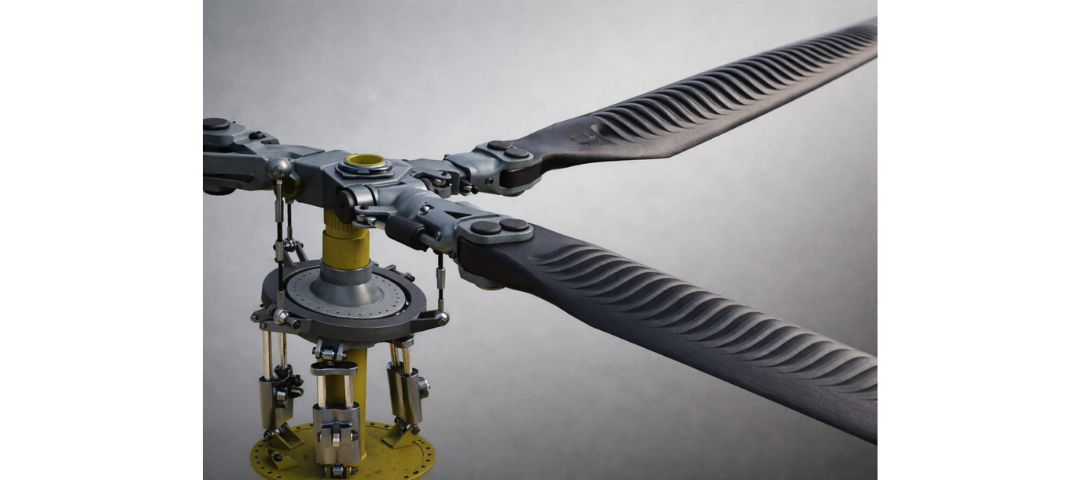
One of the concepts emerging from this approach is the specialized ridged propeller design, an aerodynamic innovation that introduces carefully engineered ridges along the surface of propeller blades. Rather than maintaining a completely smooth blade surface, the ridges are designed to influence airflow behavior across the blade, helping stabilize the boundary layer and reduce turbulence during rotation.
By improving the interaction between the blade and surrounding air, the concept aims to enhance propulsion efficiency while reducing aerodynamic energy losses.
Small Efficiency Gains with Large Global Impact
In aviation engineering, even minor improvements in efficiency can lead to significant operational benefits. A single turboprop aircraft can consume between *one and one and a half million liters of aviation fuel annually*. If propulsion systems become even slightly more efficient, the resulting fuel savings across large fleets can be substantial.
Preliminary aerodynamic estimates associated with the ridged propeller concept suggest that propulsion efficiency improvements of approximately *3–6 percent* may be possible under certain operating conditions.
While this percentage may appear modest, its implications at scale could be considerable. A turboprop aircraft operating with improved propulsion efficiency could potentially save tens of thousands of liters of aviation fuel annually, reducing operational costs while also lowering environmental impact.
Because aviation fuel combustion produces significant carbon dioxide emissions, improvements in propulsion efficiency can also contribute to broader sustainability goals within the aerospace industry.
Applications Across Multiple Aviation Platforms
One of the intriguing aspects of Dacharla’s aerodynamic concept is its potential adaptability across different aircraft platforms.
Propeller-driven propulsion systems are widely used not only in turboprop aircraft but also in helicopters, unmanned aerial vehicles (UAVs), drones, and emerging urban air mobility aircraft. These systems all rely on rotating aerodynamic airfoils to generate thrust and lift.
If aerodynamic improvements such as stabilized airflow and reduced turbulence can be achieved through blade surface innovations, the impact could extend across multiple segments of the aviation ecosystem.
In addition to improving propulsion efficiency, stabilizing airflow around rotating blades may also contribute to *reduced aerodynamic noise*, which remains a significant concern in both helicopter operations and drone deployments near populated areas.
Lower acoustic signatures could play an important role in the development of urban air mobility solutions and future aerial transportation technologies.
Bridging Innovation and Real-World Applications
While theoretical concepts and computational research form the foundation of aerospace innovation, the path toward practical implementation often requires extensive validation, collaboration, and engineering refinement.

To support the aerodynamic concept behind the ridged propeller design, Rohith Dacharla conducted a research study titled *“Enhancing Propeller Performance: A Study of the Ridged Propeller.”* The research examined multiple design variations using computational simulations to analyze lift generation and turbulence behavior in comparison with conventional propeller designs.
The findings indicated improvements in airflow stability and lift performance across several design configurations, highlighting the potential of blade surface modifications to influence aerodynamic performance.
Although further real-world testing and experimental validation will be necessary, the research provides a scientific framework for exploring how such innovations could be developed in practical aerospace applications.
Innovation Beyond the Laboratory
For Rohith Dacharla, innovation is not limited to technical research alone. His broader vision involves encouraging a culture of engineering creativity and independent technological exploration.
As an entrepreneur and inventor, he has received recognition from various institutions and record organizations for contributions to technological innovation. He has also been invited to share his perspectives at *international technology summits and innovation platforms*, where discussions often focus on the importance of bold ideas and unconventional thinking in shaping the future of engineering.
Dacharla believes that meaningful technological progress often emerges when individuals are willing to question established norms and pursue ideas that initially seem difficult to implement.
Looking Toward the Next Era of Aerospace Technology
The aerospace industry is currently undergoing one of the most transformative periods in its history. With increasing demand for efficiency, sustainability, and advanced flight technologies, engineers and innovators around the world are exploring new approaches to propulsion systems and aircraft design.
Innovations such as the ridged propeller concept illustrate how relatively small design modifications can potentially produce meaningful improvements in performance and environmental impact.
For Rohith Dacharla, this work represents part of a larger mission: exploring engineering ideas that could contribute to smarter, more efficient aerospace technologies in the future.
His philosophy captures this vision clearly:
“True innovation begins where conventional thinking ends. Bold ideas, when pursued with persistence and discipline, have the power to transform industries and shape the future.”
As research and development in aerospace technology continue to evolve, innovators like Rohith Dacharla are helping demonstrate that progress often begins with the willingness to rethink even the most familiar components of engineering systems.
Follow Rohith Dacharla’s work and upcoming innovations:
LinkedIn: (http://www.linkedin.com/in/rohith-dacharla)
Instagram: https://www.instagram.com/rohith_dacharla